* You are viewing the archive for the ‘ternary’ Category
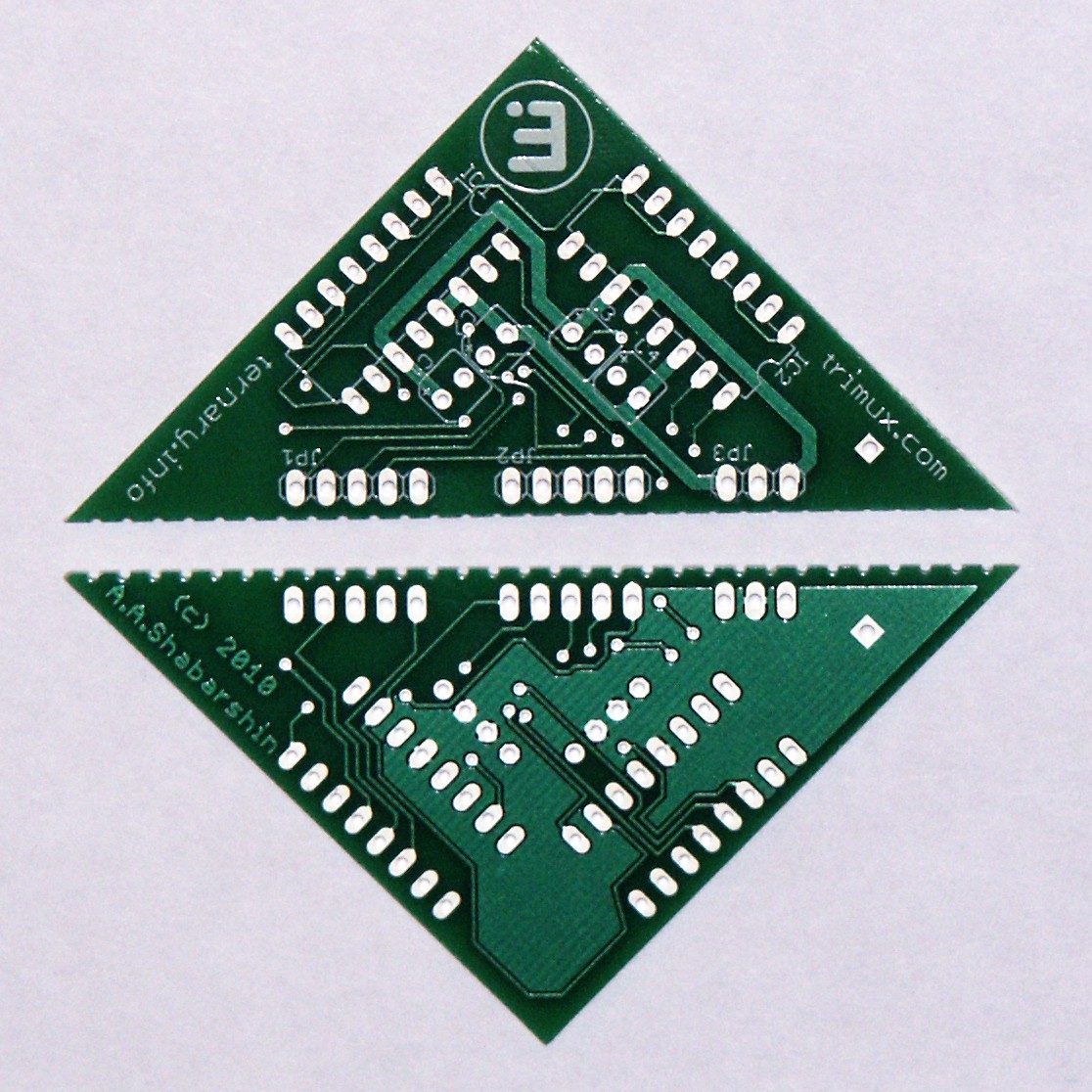
TRIMUX: Simple applications
TRIMUX may be used as memory element:
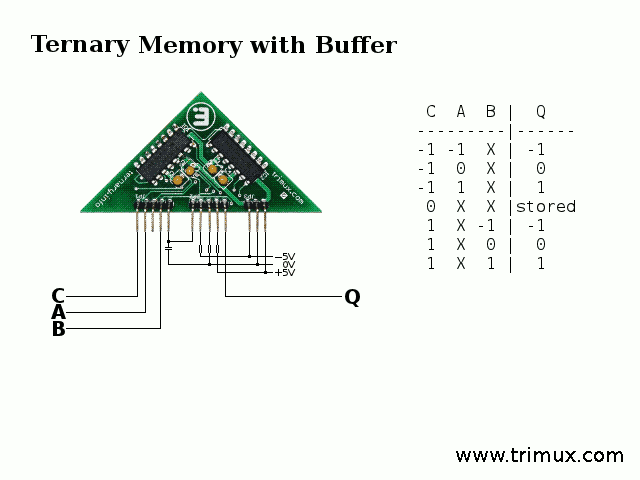
TRIMUX as ternary memory cell
or as buffer and inverter:
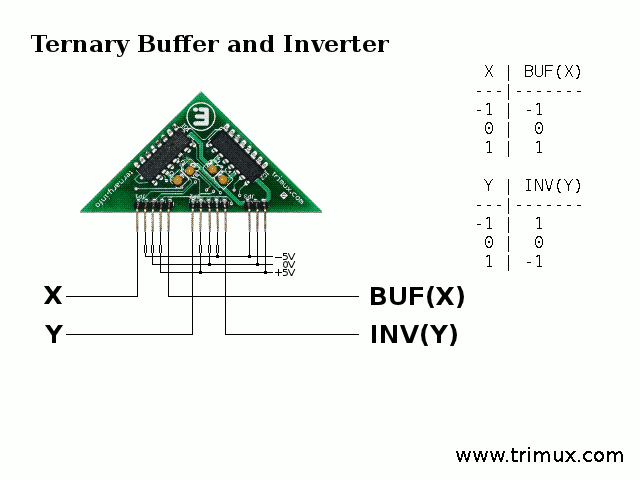
TRIMUX as buffer and inverter
To test TRIMUXes we may use 17-rows breadboards:
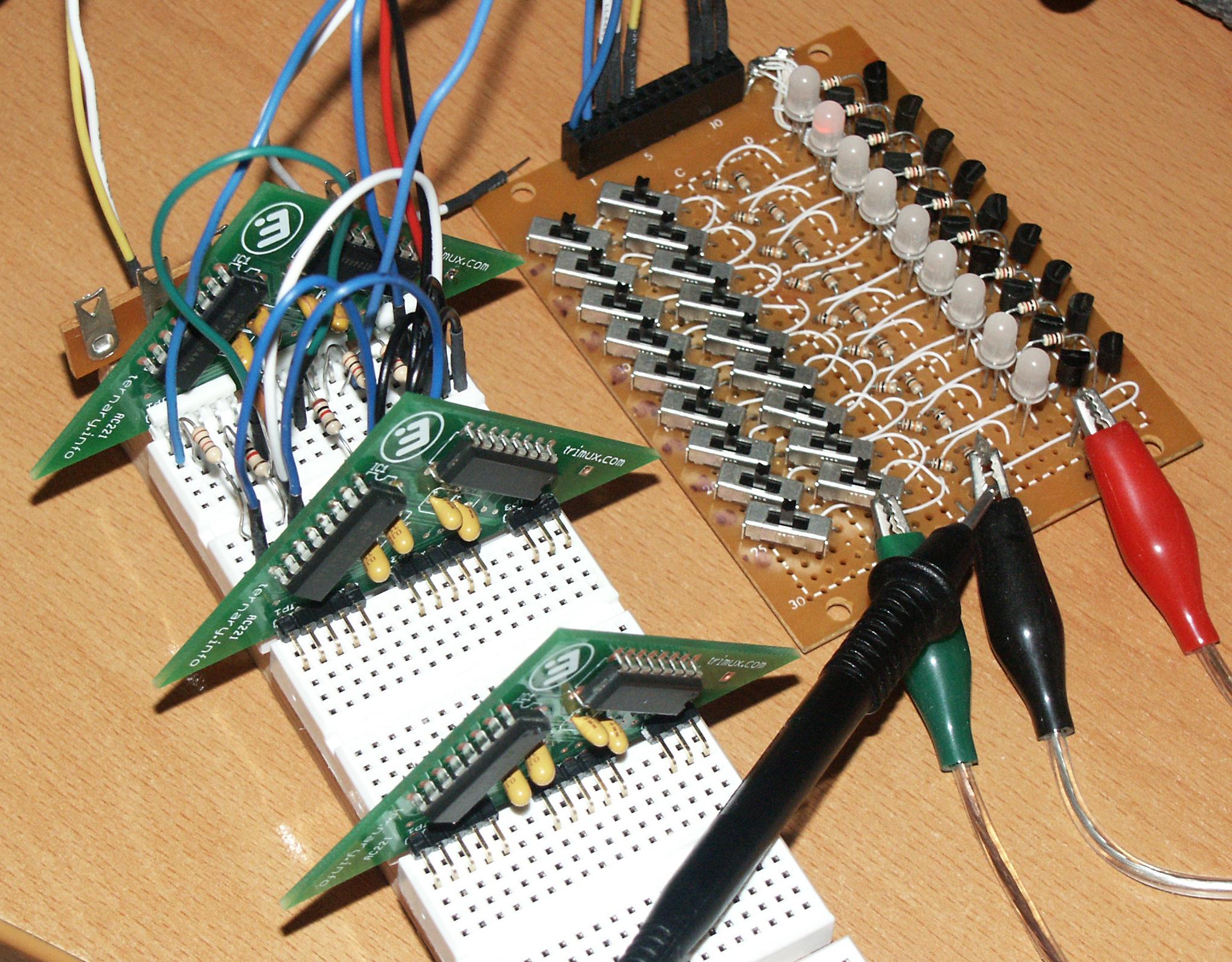
TRIMUX breadboard test
1K resistors may be removed for faster operations (1 MHz instead … Continue Reading
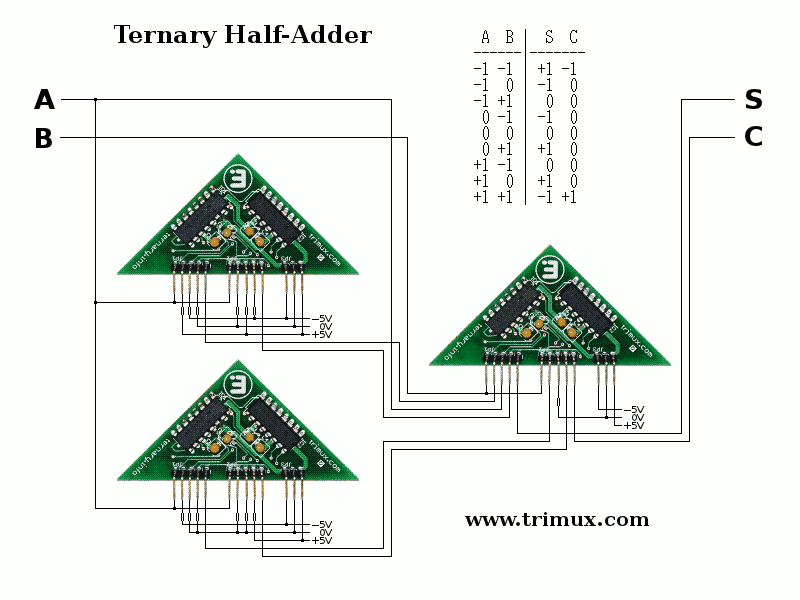
TRIMUX PCB for Sale
Now you can buy TRIMUX PCB to create real ternary hardware (including ternary computer)!
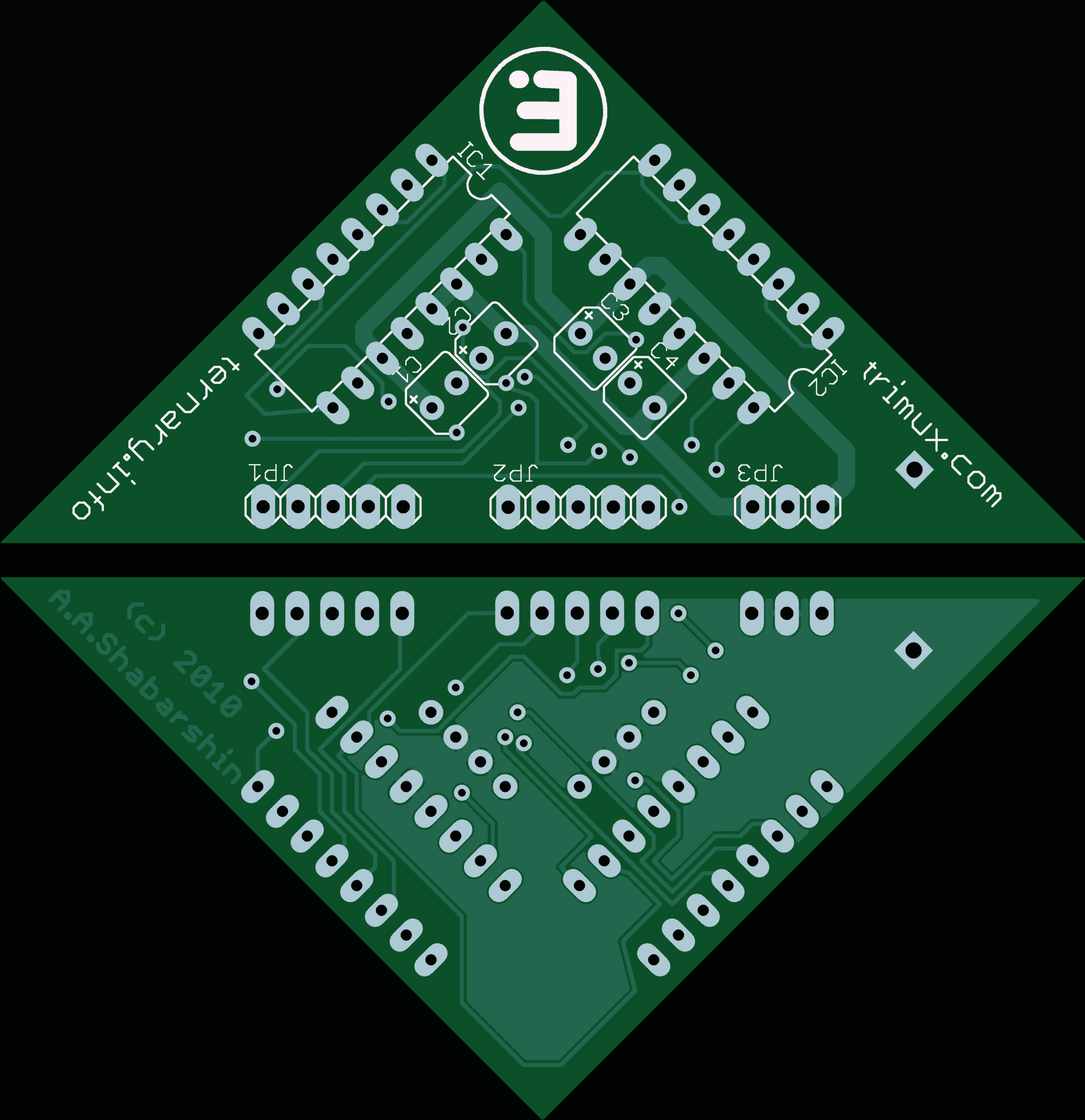
TRIMUX PCB
It is dual ternary multiplexer board – $13 for each PCB (plus $10 handling and plus shipping):
http://batchpcb.com/index.php/Products/47438
Attention: BatchPCB has waiting time 3-4 weeks!
Design files can be downloaded from www.trimux.com
Components are available from Mouser
Discussion: http://www.ternary.info/modules/newbb/viewforum.php?forum=5
Ternary multiplexer (selector)
My hardware design described earlier has been proven to be working:
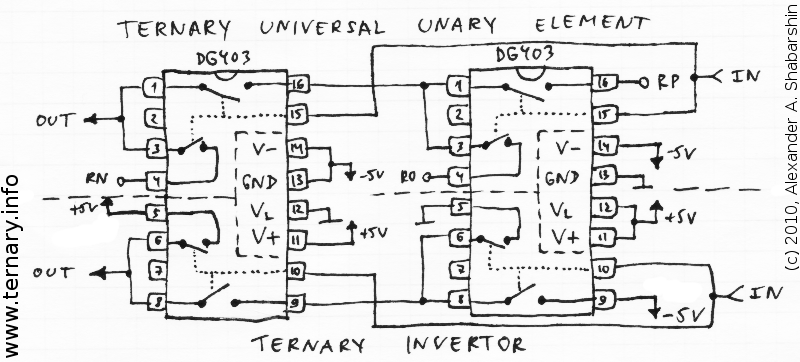
DG403: two chips - no more components
Today two DG403s, four chip-capacitors 0.022 uF and 15-pin header were composed by me to the dual ternary multiplexer TRI41D:
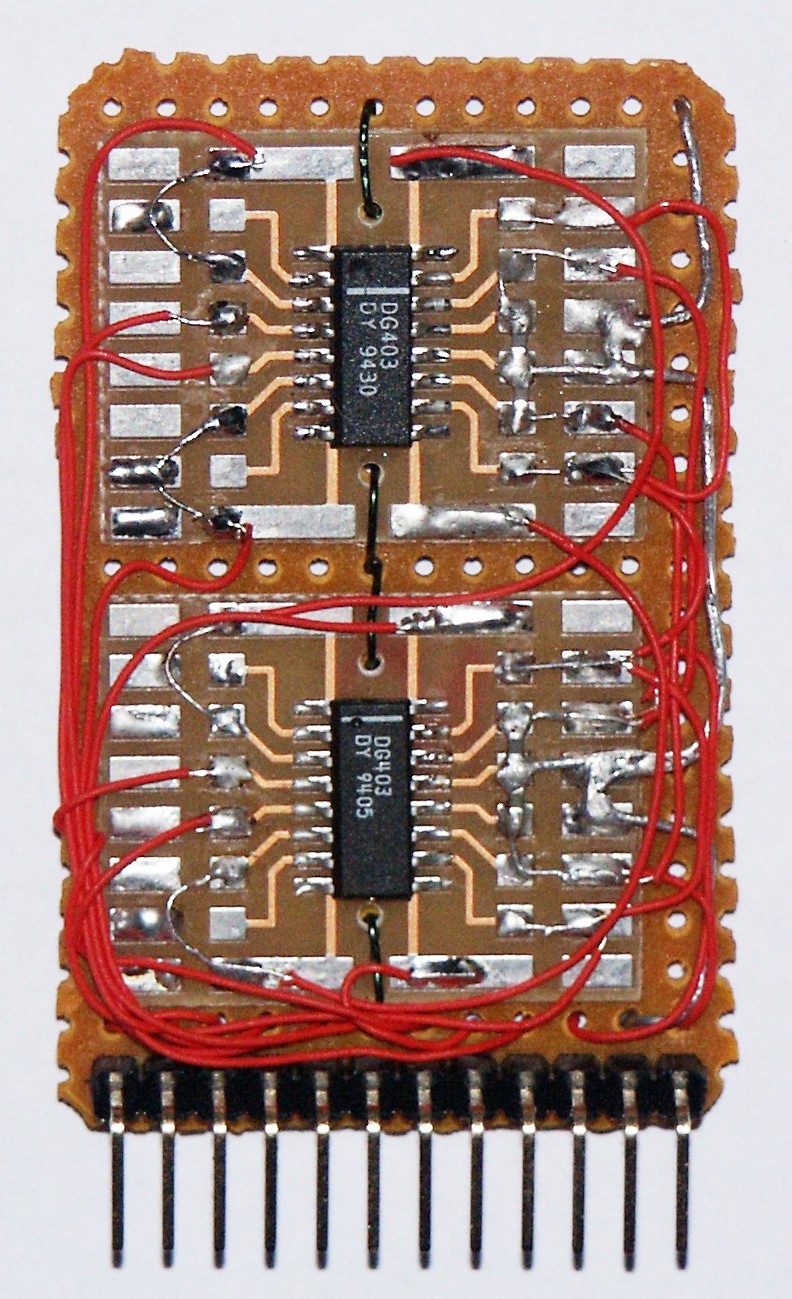
1st test of TRI41D
TRI41D pins description:
1. S – select command (choose pins to connect)
2. N1 – connected to C1 if S=”N” (negative)
3. O1 – connected to C1 if S=”O” (ground)
4. … Continue Reading
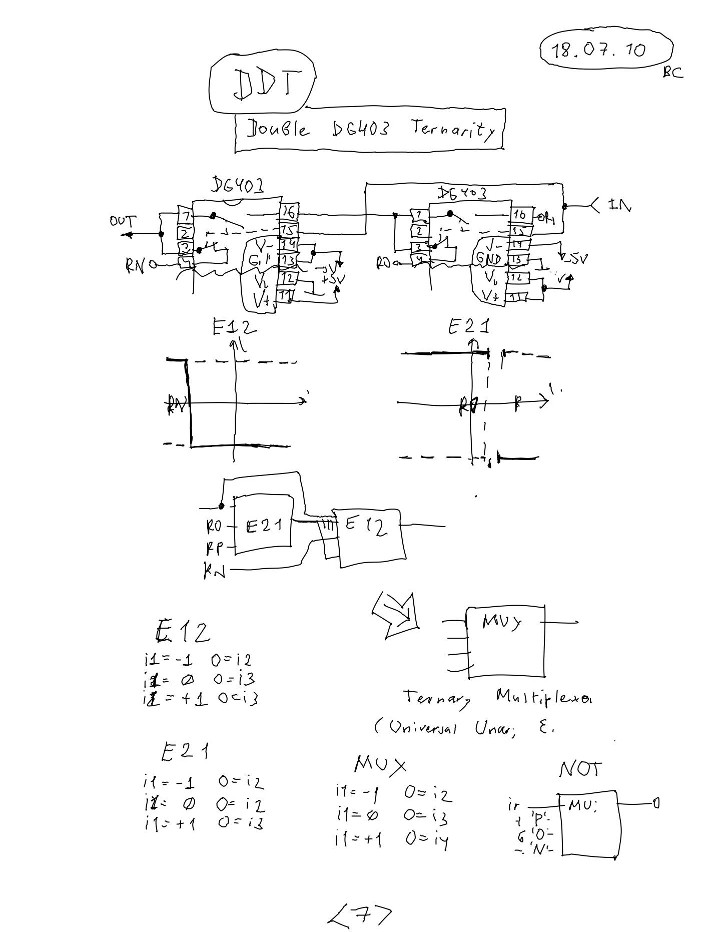
Ternary Hardware – CMOS switches

DG403: one chip with resistors
Here I use undocumented feature of DG403 when normally closed switch opened by voltage lower than required to close another (normally opened) switch. Variable resistor is used to move that “both-opened” window to ternary “0″ zone (up from -3.0V…-0.8V to cover 0V).
DG403: two chips - no more components
Second scheme is more “correct” (nothing from undocumented features were used).
P.S. Ternary selector may be used as ternary inverter when RP=-5V, RO=0V, RN=+5V. … Continue Reading
Ternary Morse Link
Way to convert Morse code to balanced ternary code and back:
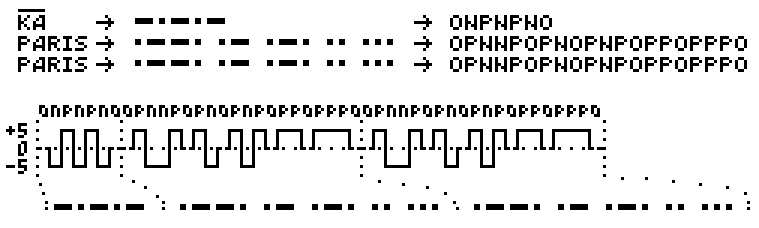
Ternary Morse Link Diagram
For more details see our ternary forum
2nd test of binary board for ternary computer
Today I created second test for my quasi-ternary board – it is a ternary clock:More about board is here
 I'm software developer (mostly C/C++) who relocated from Russia to United States in 2004. Lived in NY, CO and now CA. Since 1998 my Internet nickname is "Shaos" (not chaos)...